Episode 3: How to Make an Inuit Disappear


In case you missed it, here is a link to episode 3: https://podcasts.apple.com/podcast/id1896469784.
Image Descriptions…
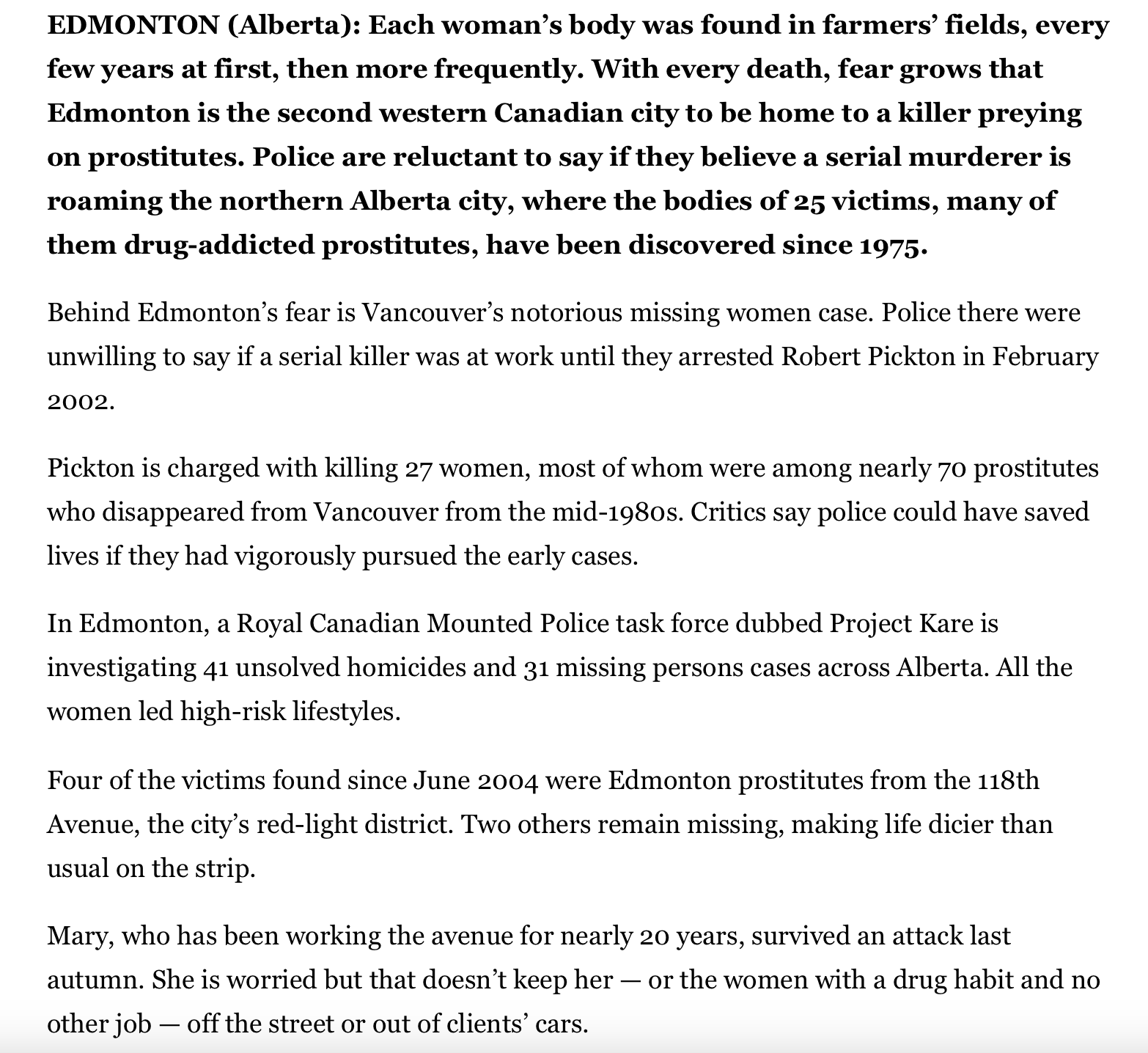
Image 1: clipping from a June 12, 2005 article from dawn.com on the killings of women in the sex trade in Edmonton, and the failure of police to connect these to a single serial murder, along with the similarities to the missing women of Vancouver
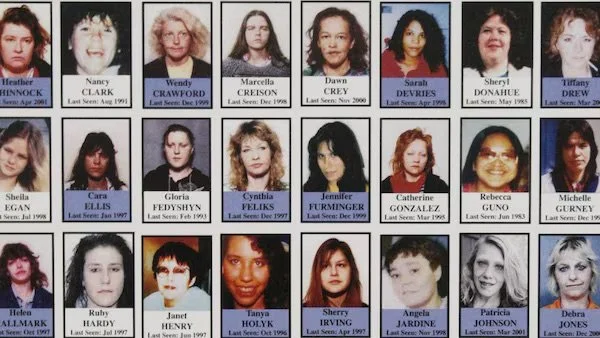
Image 2: collage of photos of some of the missing women from Vancouver’s Downtown Lower Eastside
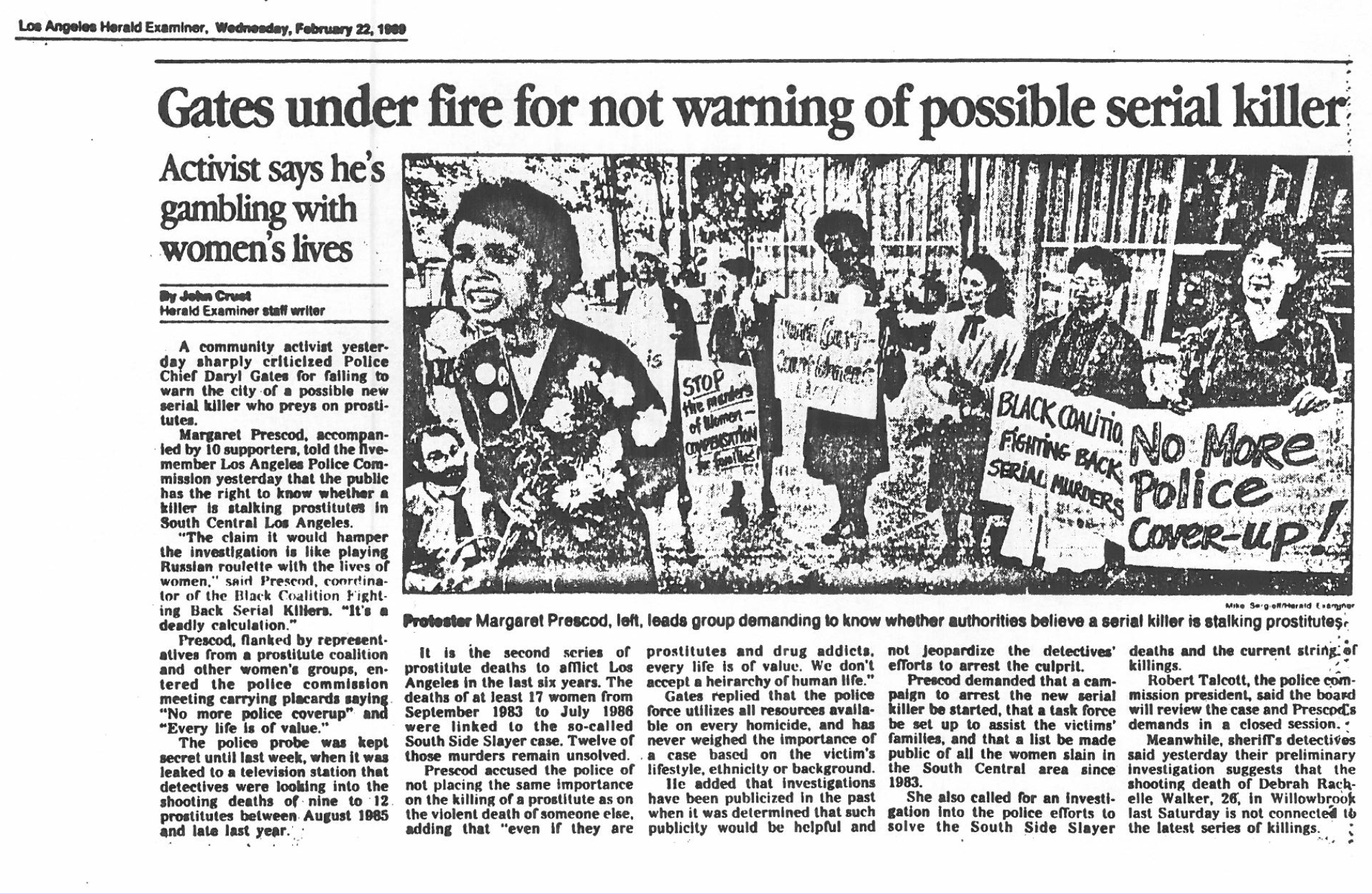
Image 3: newspaper clipping from the Los Angeles Herald Examiner February 22, 1989 edition on the police failure to investigate the serial murders to Black women involved in the sex trade, retrieved from the Black Coalition Fighting Back Serial Murders
Image 4: photo of Siasi Tullaugak
Image 5: photo of Sharon Baron
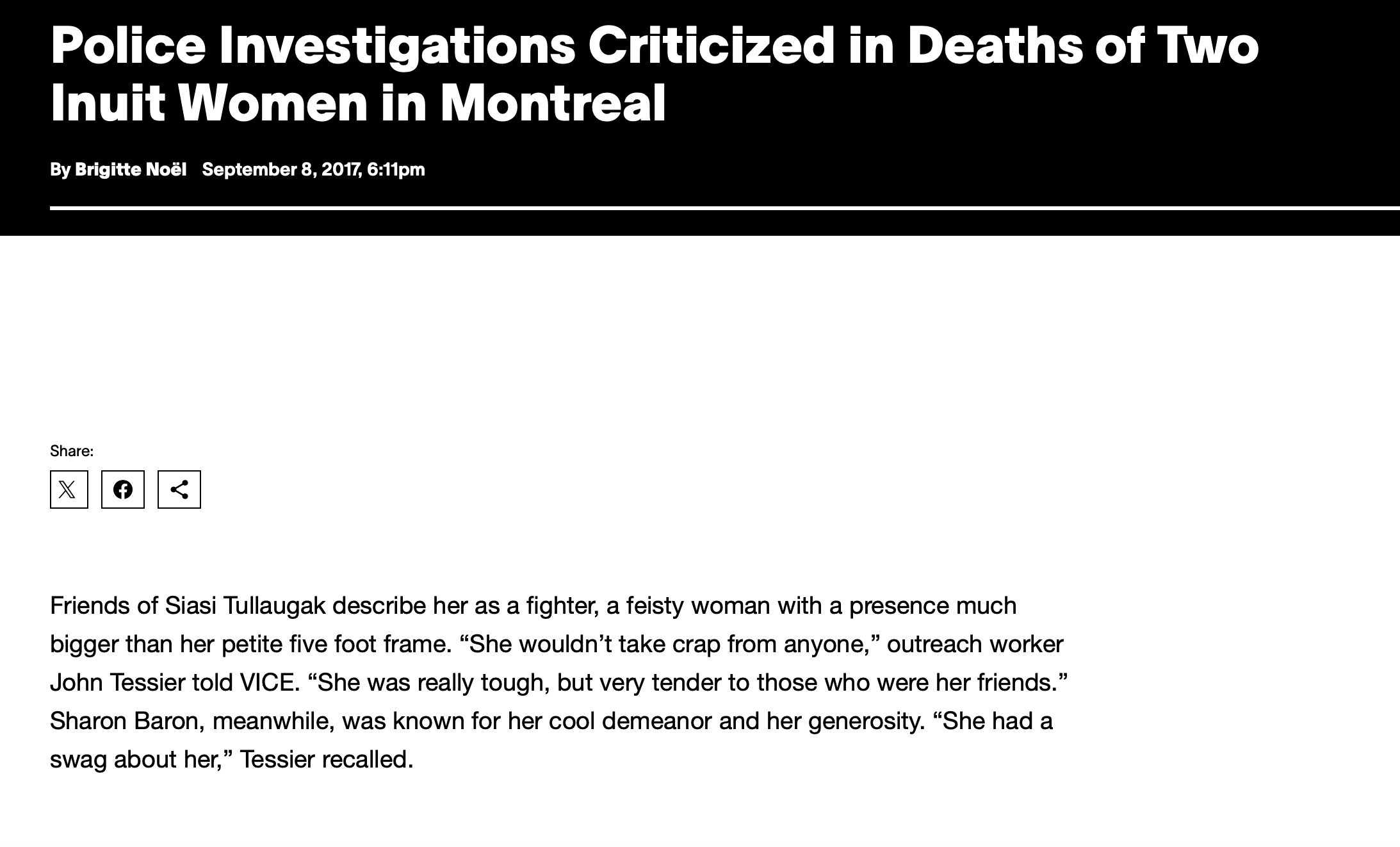
Image 6: clipping from September 8, 2017 Vice News article
In this episode….
In our third episode of “Manufactured Death”, we start out by considering what happens when dominant social scripts render certain people as disposable, and then push these people into marginalized public spaces. We look at how the ways in which these dominant social scripts essentially give permission for killers to get away with murder, while giving police an excuse not to investigate. Specifically, we look at the killings of Nunia Grey, Siasi Tullaugak, and Sharon Baron, and their ties to The Wrathful One.
Timestamps…
Introduction to the show and overview of the missing women of Vancouver: 00:36
Marked bodies in marked spaces: 8:02
Discourses of disposal: 13:37
The Wrathful One: 20:16
Nunia Grey: 32:59
Siasi Tullaugak: 41:59
Sharon Baron: 47:24
Calls to Action…
Call the SPVM at 514-280-2222 and demand that they re-open an investigation into the deaths of Nunia Grey, Siasi Tulugak, and Sharon Baron.
Call the Quebec Minister of Justice, Simon Jolin-Barette, at 450 464-5505 and demand an investigation be opened into the deaths of Nunia Grey, Siasi Tulugak, and Sharon Baron. Call on him to open an inquest into the SPVM’s handling of these cases.
Contact the Federal Minister of Justice, Sean Fraser, and ask that he intervene and call on the Montreal police to investigate the deaths of Nunia Grey, Siasi Tulugak, and Sharon Baron. Call on his office to demand an investigation into the conduct of the Montreal police surrounding the disappearances and murders of sex workers and Indigenous women in Montreal.
Resources…
National Inquiry on MMIWG2S+: https://www.mmiwg-ffada.ca/final-report/
Quebec Family Information Liaison Unit: https://www.quebec.ca/en/gouvernement/ministeres-organismes/secretariat-premieres-nations-inuit-srpni/mission-mandats/qfilu
Selena Ross National Observer article: https://www.nationalobserver.com/2017/10/16/news/branded-how-inuit-women-montreal-end-street-or-dead
John Lowman’s article on “discourses of disposal”: https://www.researchgate.net/publication/238678684_Violence_and_the_Outlaw_Status_of_Street_Prostitution_in_Canada
Black Coalition Fighting Back Serial Murders: http://www.blackcoalitionfightingbackserialmurders.net/action
Article on the findings of an inquiry on police failures surrounding the missing women of Vancouver: https://www.cbc.ca/news/canada/british-columbia/pickton-inquiry-slams-blatant-failures-by-police-1.1191108
Archival file from Vancouver Rape Relief on the murder of 17-year-old Linda Tatrai in 1985, following the government’s response to relegate women in the sex trade into more dangerous parts of the city, banishing them from certain areas: https://rapereliefshelter.bc.ca/wp-content/uploads/2021/04/Rape-Relief-Files-Who-Killed-Linda.pdf
References…
Bourgeois, R. (2023). Colonial femicide: Missing and murdered Indigenous women and girls in Canada. In M. Dawson & S. Mobayed Vega (Eds.), The Routledge international handbook of femicide and feminicide. Routledge. https://doi.org/10.4324/9781003202332-49
Bureau du coroner. Personnel du Bureau. Gouvernement du Québec. Retrieved January 10, 2026, from https://www.coroner.gouv.qc.ca/organisation/emplois/personnel-du-bureau
Curtis, C. (2017, September 8). Women’s deaths spark fear, mistrust for Inuit community. Montreal Gazette. Retrieved January 10, 2026, from https://montrealgazette.com/news/local‑news/womens‑deaths‑spark‑fear‑mistrust‑in‑montreals‑inuit‑community
Enns, V. What is the impact of lateral violence? Crisis & Trauma Resource Institute. Retrieved January 10, 2026, from https://ctrinstitute.com/blog/impact-of-lateral-violence/
Kelsall, D., & Bowes, M. J. (2016). No standards: Medicolegal investigation of deaths. CMAJ, 188(3), 169. https://www.ncbi.nlm.nih.gov/pmc/articles/PMC4754172/
Lee, B. A., & Schreck, C. J. (2005). Danger on the streets: Marginality and victimization among homeless people. American Behavioral Scientist, 48(8), 1055–1081. https://doi.org/10.1177/0002764204274200
National Collaborating Centre for Indigenous Health. Aboriginal peoples and historic trauma: A legacy of intergenerational trauma. Retrieved January 10, 2026, from https://www.nccih.ca/430/Aboriginal_Peoples_and_Historic_Trauma.nccah
Native Women’s Association of Canada. (2014). Sexual exploitation and trafficking of Aboriginal women and girls: Literature review and key informant interviews: Final report (resource336-2d37041a.pdf). Canadian Women’s Foundation; Gladue Rights Research Database, University of Saskatchewan. Retrieved January 10, 2026, from https://gladue.usask.ca/sites/gladue1.usask.ca/files/gladue/resource336-2d37041a.pdf
Selig, E. (2020). Statistically speaking: The overrepresentation of foster youth in sex trafficking. Children’s Legal Rights Journal, 38(1). Retrieved January 10, 2026, from https://lawecommons.luc.edu/clrj/vol38/iss1/8
Sethi, A. (2007). Domestic sex trafficking of Aboriginal girls in Canada: Issues and implications. First Peoples Child & Family Review, 3(3), 57–71. Retrieved January 10, 2026, from https://fpcfr.com/index.php/FPCFR/article/view/50/88
Statistics Canada, & Office of the Commissioner of Indigenous Languages. (2025). Indigenous language families: Inuktut (Inuit) languages (Catalogue No. 41-20-0002-2025004-eng). Government of Canada. Retrieved January 10, 2026, from https://www150.statcan.gc.ca/n1/pub/41-20-0002/412000022025004-eng.htm
Peace Over Violence.III. The cycle of violence and power and control. Peace Over Violence. Retrieved January 10, 2026, from https://www.peaceoverviolence.org/iii-the-cycle-of-violence-and-power-and-control
Ross, S. (2017, October 16). Branded: How Inuit women in Montreal end up on the street — or dead. National Observer. Retrieved January 10, 2026, from https://www.nationalobserver.com/2017/10/16/news/branded-how-inuit-women-montreal-end-street-or-dead
Secrétariat aux emplois supérieurs. (2014, November 12). Note biographique : Catherine Rudel‑Tessier. Gouvernement du Québec. Retrieved January 10, 2026, from https://www.emplois-superieurs.gouv.qc.ca/Nominations/Communique/2014-11-12/Notes-Biographiques/Catherine-Rudel-Tessier/7064
Timmons, V., Coomber-Bendtsen, M., & Zederayko, A. (2018). Gender-based violence and homelessness: Two sides of the same coin (Policy Brief). Johnson Shoyama Graduate School of Public Policy, University of Saskatchewan & University of Regina. Retrieved January 10, 2026, from https://www.schoolofpublicpolicy.sk.ca/documents/research/policy-briefs/JSGS-policybriefs-Gender-Based%20Violence%20and%20Homelessness.pdf
United Nations Office on Drugs and Crime. (2018, November 25). Home, the most dangerous place for women, with majority of female homicide victims worldwide killed by partners or family — UNODC study says. United Nations Office on Drugs and Crime. Retrieved January 10, 2026, from https://www.unodc.org/unodc/en/press/releases/2018/November/home--the-most-dangerous-place-for-women--with-majority-of-female-homicide-victims-worldwide-killed-by-partners-or-family--unodc-study-says.html
United Nations Office on Drugs and Crime & UN Women. (2022). Statistical framework for measuring the gender‑related killing of women and girls (also referred to as “femicide/feminicide”). United Nations. Retrieved January 10, 2026, from https://data.unwomen.org/sites/default/files/documents/Publications/CEGS/Statistical_framework_femicide_2022.pdf